Blessings,

Book a call
Eating healthy has somehow become complicated. Long ingredient lists, confusing labels, and foods that promise energy but often leave us feeling sluggish. And yet, when you pause and look how God originally designed food to nourish and fuel our bodies, it’s actually very simple.
Take a sweet potato, for example. It has one ingredient: a sweet potato.
No label. No explanation. No extras.
Food was never meant to be confusing. Instead, it was created to fuel us, nourish us, and support the life we’re living. Our bodies were designed with wisdom, and real food works with them—not against them.
Whole Foods: Simple by Design
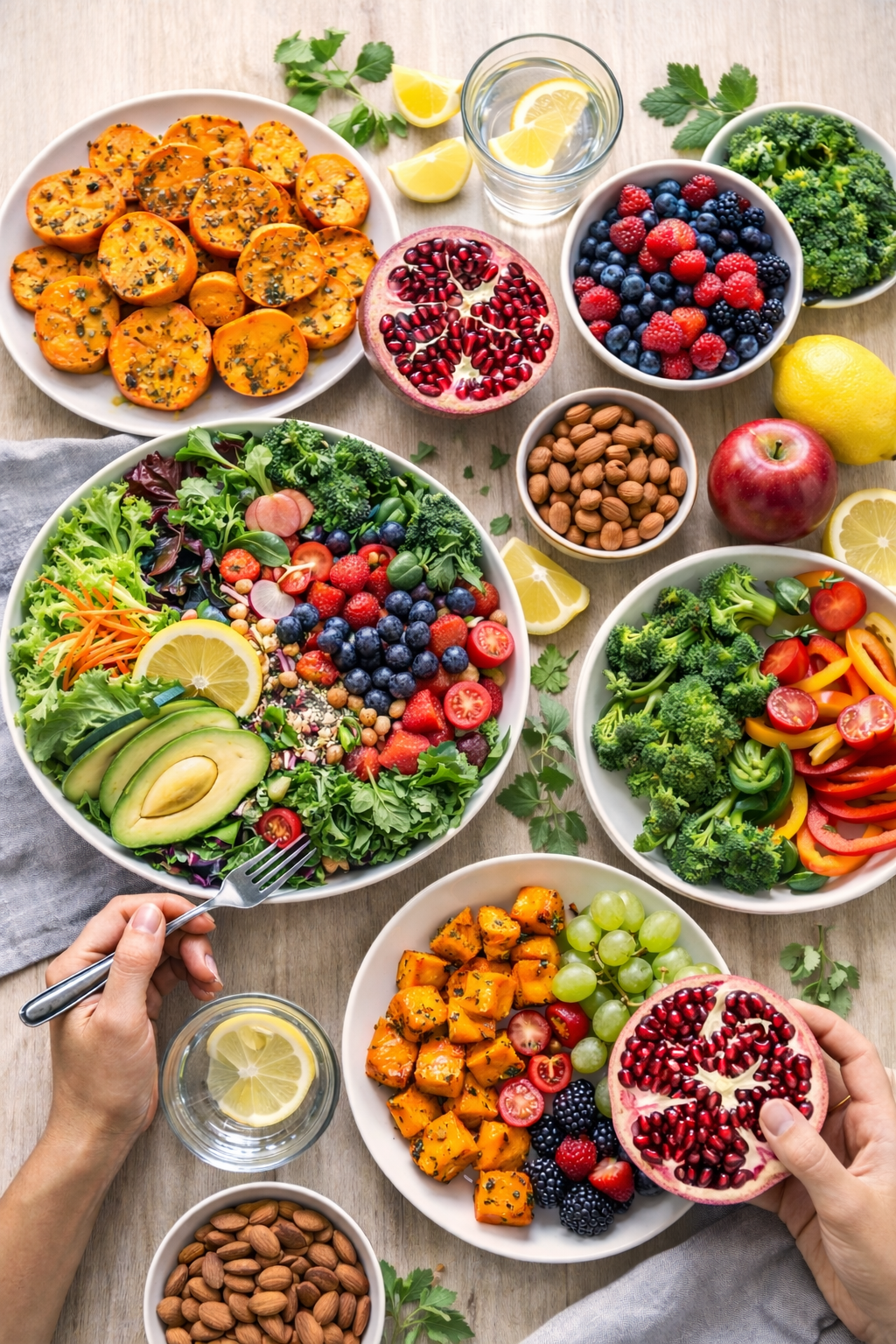
Whole foods are foods that stay close to the way they were created—grown from the ground, picked from a tree, or prepared with minimal processing. Because of this, they don’t rely on artificial flavors, preservatives, or fillers to do their job.
Over time, many people notice that when they eat foods that are simple and recognizable, their bodies respond positively. Not because they are following strict rules, but because nourishment feels natural again.
Less Ingredients Really Is More
If you flip over a package and don’t recognize half the ingredients, that alone can feel overwhelming. On the other hand, whole foods don’t need enhancement or improvement. They already contain fiber, vitamins, minerals, healthy fats, and energy the body knows how to use.
As a result, meals built around simple ingredients often lead to:
- More steady energy throughout the day
- Improved digestion
- Fewer cravings and crashes
- Greater satisfaction after meals
Simply put, the body thrives when it receives what it recognizes.
Foods That Naturally Nourish the Body
Here are a few whole foods that are naturally rich in nutrients, taste delicious, and fuel the body just as they are—without needing to add a thing.
Sweet Potatoes
Sweet potatoes offer a beautiful example of simplicity. With one ingredient and no extras, they provide fiber and complex carbohydrates that support digestion and steady energy.
Additionally, they contain vitamin A for immune support and potassium for muscle function. Rather than spiking energy levels, sweet potatoes help sustain them.
Pomegranates
Pomegranates deliver powerful antioxidants that support heart health and help reduce inflammation. In addition, they support cellular health and protect the body from oxidative stress.
Because they are both nutrient-dense and flavorful, pomegranates prove that nourishment doesn’t have to be boring.
Olives (and Olive Oil)
Olives provide healthy monounsaturated fats that support heart health, brain function, and hormone balance. Olive oil also contains natural anti-inflammatory compounds that support long-term wellness.
For this reason, olives offer the kind of fat that satisfies and stabilizes rather than drains the body.
Grapes
Grapes naturally hydrate the body while supplying antioxidants like resveratrol, which supports heart health and circulation. They also offer a naturally sweet option that helps curb sugar cravings.
Whether eaten as a snack or added to meals, grapes are simple and refreshing.
Almonds
Almonds combine healthy fats, fiber, and plant-based protein to help stabilize blood sugar and promote fullness. They also supply magnesium, a mineral many women lack.
Although small, almonds provide lasting nourishment and support both brain and metabolic health.
Simple Ways to Add Whole Foods into Your Weekly Diet
Eating mostly whole foods doesn’t mean striving for perfection. Instead, it means building meals around foods that naturally nourish the body while keeping ingredients as simple and recognizable as possible.
Here’s what that can look like in everyday life:
Breakfast
- Eggs with sautéed spinach and sweet potatoes
- Greek yogurt with berries and almonds
- A smoothie with whole fruit, greens, and protein
Lunch
- Grilled chicken over mixed greens with olive oil
- Leftover roasted vegetables with a simple protein
- Salmon salad made with minimal ingredients
Dinner
- Baked salmon with roasted sweet potatoes and broccoli
- Chicken cooked with olive oil, herbs, and seasonal vegetables
- Grass-fed beef with roasted root vegetables
Snacks
- Apple with almond butter
- Grapes with a handful of nuts
- Hard-boiled eggs
Simple. Nourishing. Satisfying.
A Closing Reflection
Healthy living doesn’t need to feel extreme or overwhelming. Often, the most life-giving shift comes from returning to simplicity and choosing foods that nourish rather than complicate.
Whole foods remind us that our bodies don’t need fixing. Instead, they need support. Over time, small and consistent choices can help us feel stronger, more energized, and better equipped to live fully.
Start where you are. Choose one simple, nourishing food, and enjoy the goodness of food just as God designed it to be enjoyed.
You may also like reading other posts at My Healthy Living Boutique Blog where I share more practical ways to build healthy habits that support your body and everyday life.
If you’re feeling drawn to a more faith-centered approach to health and wellness, I’d love to invite you to learn more about Strong in Faith, Fit in Body —a space where we focus on nourishing the body, strengthening faith, and building sustainable, grace-filled habits.
Disclaimer:
The information shared in this post is for educational and inspirational purposes only and is not intended to replace medical advice. Always consult with your healthcare provider or a qualified professional before making changes to your diet, especially if you have medical conditions, food allergies, or specific health concerns.
Healthy living looks different for everyone, and this post is meant to encourage simple, nourishing choices—not perfection.